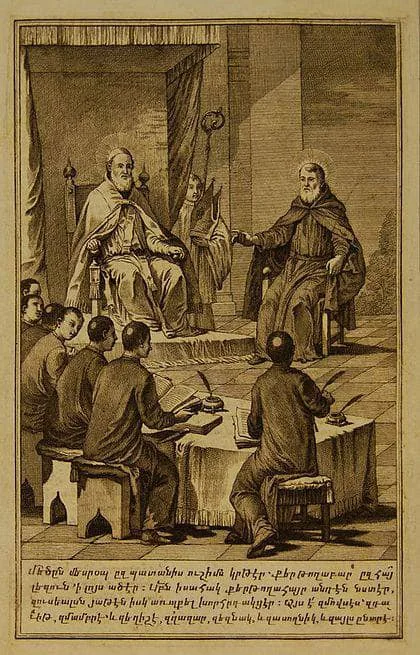


At the end of the 4th century Armenia was a Christian country, but it had no writing of its own. Church services were held in Greek and Syriac, and state records were kept in foreign languages, so most people understood neither the Holy Scriptures nor the prayers. After the partition, when most of the country came under the rule of Zoroastrian Persia, the need for an Armenian script and literature became more urgent. This work was led by three men: King Vramshapuh, the Armenian Catholicos Sahak Partev and Mesrop Mashtots.
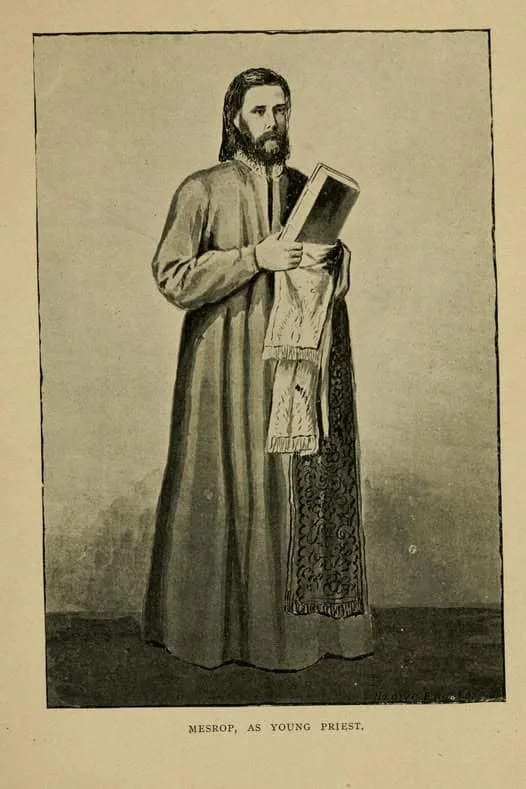
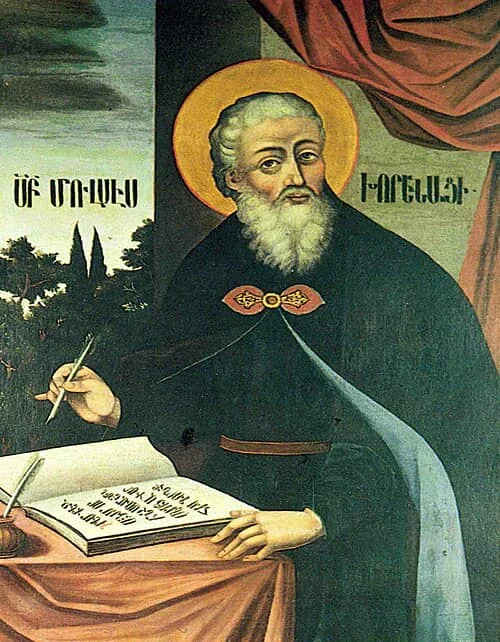
Mesrop Mashtots was born around 362 in the village of Hatsekats in the district of Taron. He received a good education, knew Greek, Syriac and Persian, served in the royal chancery, and then became a monk and a preacher. While preaching in the district of Goghtn he saw how hard it was to teach the people Christianity without books in Armenian. Sahak Partev (c. 348–439), of the family of Gregory the Illuminator, was a learned and respected head of the church and Mashtots’s chief partner throughout his life. We know about Mashtots’s life above all from the Life of Mashtots by his pupil Koryun, written in the middle of the 5th century and one of the first original works written in Armenian.
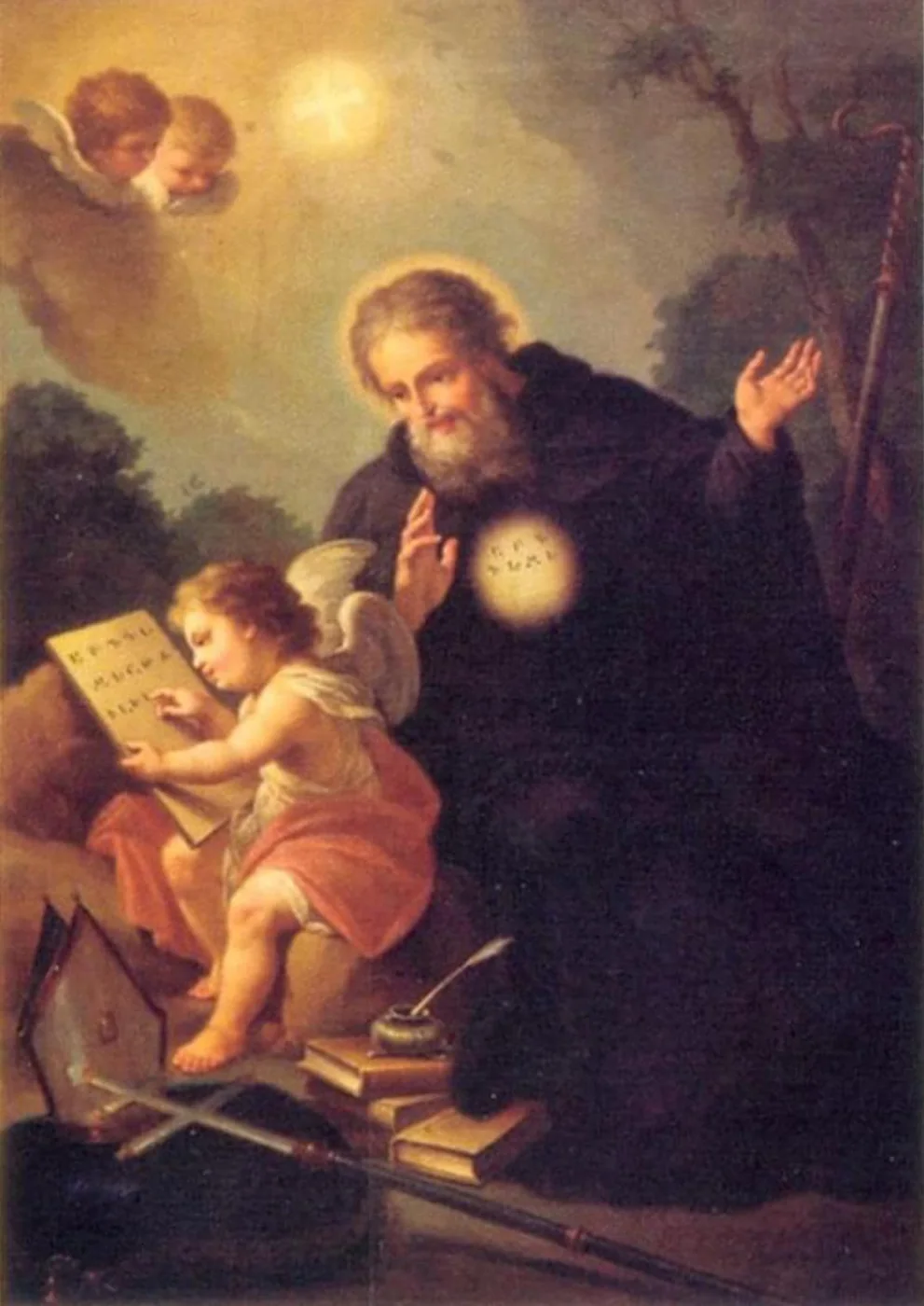
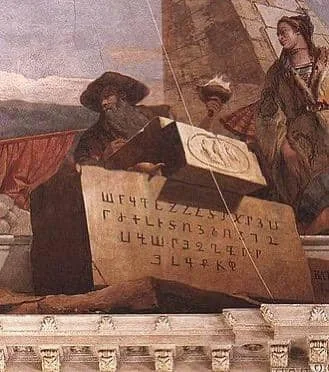
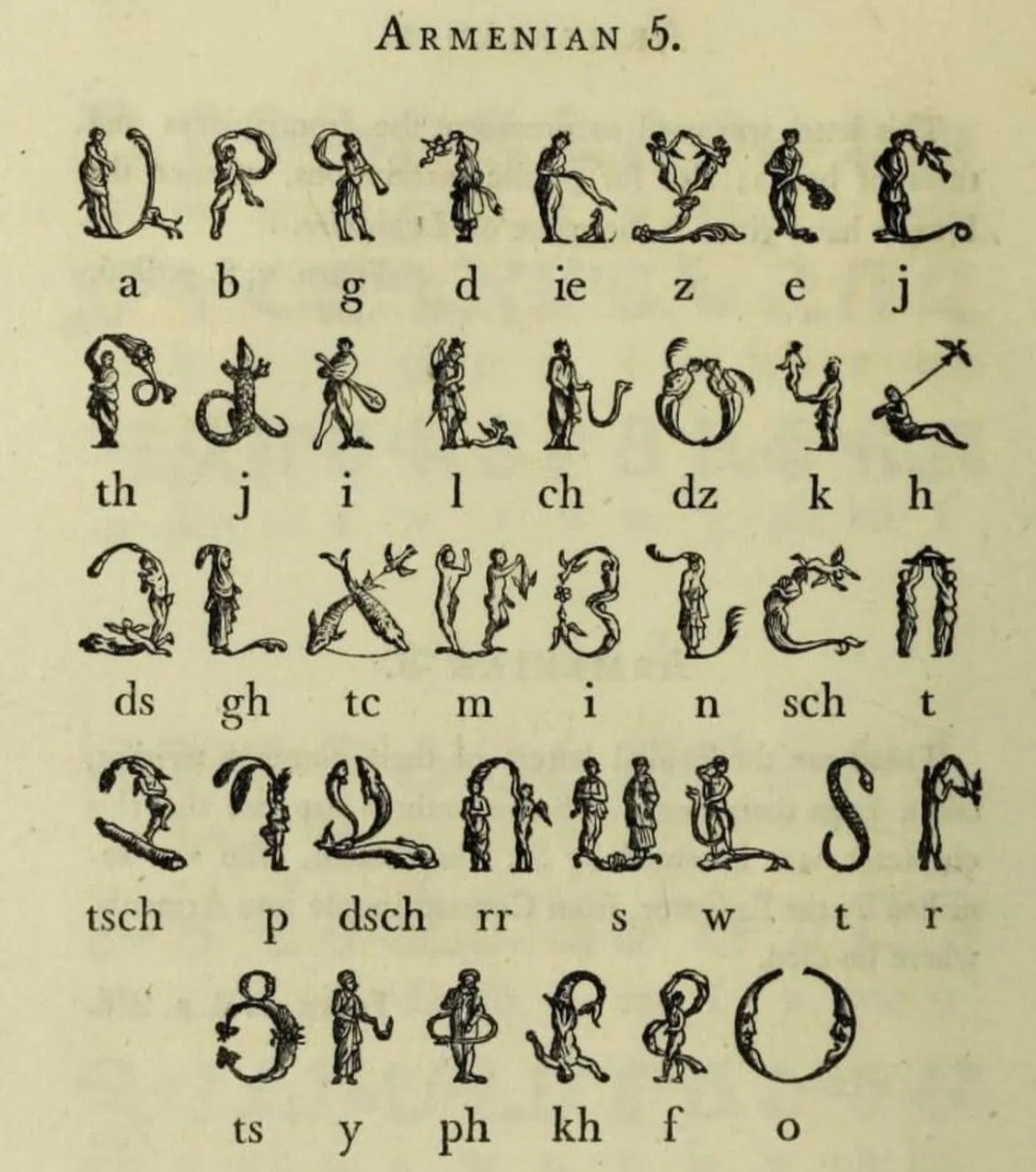
Koryun relates that at first they tried to use letters kept by a Syrian bishop named Daniel, but these did not render all the sounds of Armenian. Mashtots then travelled with his pupils to the cities of Syria, Amida and Edessa (Urfa), and later to Samosata, and there he created the Armenian letters. In Samosata a Greek scribe named Rufinus helped give the letters their final, elegant form. The traditional date is 405, although some researchers prefer other years close to it. The alphabet consisted of 36 letters that rendered the sounds of Armenian precisely. In the Middle Ages two more letters were added, ‘o’ and ‘f’. The first sentence translated with the new letters was the opening of the Book of Proverbs: ‘To know wisdom and instruction, to perceive the words of understanding.’
On returning to Armenia, Mashtots and Sahak opened schools and began to train translators. Their pupils, later known as the Holy Translators, were sent to Edessa, Constantinople, Alexandria and other centres to learn languages and bring back manuscripts. The translation of the Bible began from Syriac, and after the Council of Ephesus in 431 it was revised on the basis of accurate Greek copies brought from Constantinople and completed in the 430s. For its accuracy and the beauty of its language one 18th-century European scholar called it ‘the queen of translations’. Works of the Church Fathers, philosophers and historians were also translated. The originals of some works translated into Armenian in early times were later lost and survive only in Armenian, such as the complete text of the Chronicle of Eusebius of Caesarea. According to Koryun, Mashtots also created letters for the Georgians and for Caucasian Albania, but his role in this is debated among scholars.
In the 5th century an original Armenian literature also came into being, and this period is traditionally called the Golden Age. Mashtots’s pupil Eznik of Kolb wrote the theological and philosophical work Refutation of the Sects. The history preserved under the name of Agathangelos describes the conversion of Armenia to Christianity, while the Epic Histories, traditionally attributed to Faustus of Byzantium, tell of the events of the 4th century. At the end of the century Ghazar Parpetsi wrote a History of Armenia that reaches the year 485. These works are our main sources for the early history of Armenia, although in them historical information is interwoven with traditions and with narratives written for religious purposes.
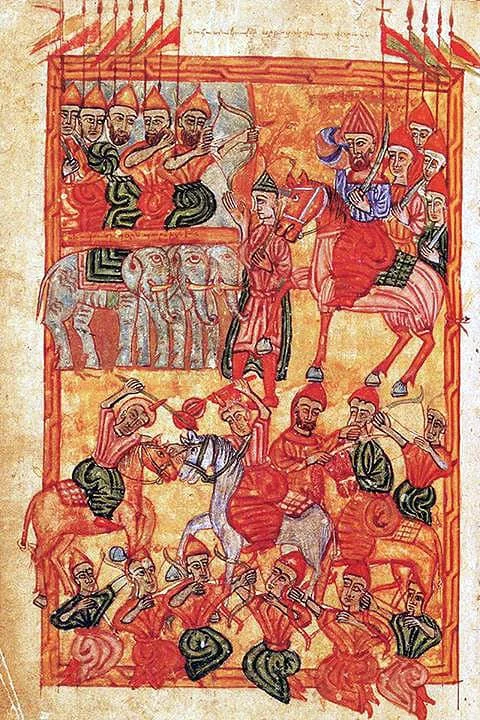
Mashtots died in 440 and was buried at Oshakan; Sahak had died a year earlier. A decade later the Sasanian king Yazdegerd II demanded that the Armenians adopt Zoroastrianism. In 451, on the plain of Avarayr, the Armenian army led by Vardan Mamikonian gave battle to the Persian army. Vardan and many of his companions were killed, and the battle was a military defeat, but resistance continued. In 484, by the Treaty of Nvarsak, Persia recognised the Armenians’ freedom of religion, and the leader of the uprising, Vahan Mamikonian, was soon appointed marzpan. These events are described by Yeghishe in his work On Vardan and the Armenian War, which became for Armenian readers a symbol of faith and devotion. The date of Yeghishe’s work is debated among scholars, from the second half of the 5th century to the 6th century.
Movses Khorenatsi is also traditionally regarded as a 5th-century author; his History of Armenia presents the past of the Armenian people from the forefather Hayk to the deaths of Sahak and Mashtots. Khorenatsi calls himself a pupil of Mashtots, but many modern scholars believe that the work was written later, between the 7th and 9th centuries, and the question is still discussed today. However these questions are resolved, the written culture of the 5th century gave the Armenians a literary language, Grabar (Classical Armenian), and a tradition of the book that helped preserve their identity in later centuries, when the country was often deprived of statehood. The alphabet created by Mashtots is still in use today.