

The royal tomb of Aghdzk
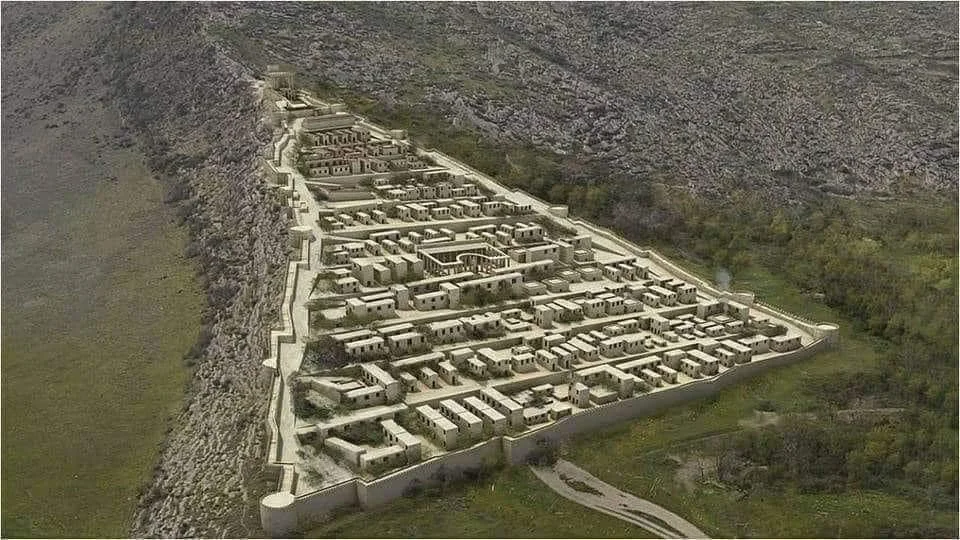
In the village of Aghdzk, in the south of Armenia’s Aragatsotn Province, stands one of the most important monuments of national history: the tomb of the Armenian kings of the 4th century. It is a whole complex of monuments on the edge of a gorge, through which the Amberd River flows. Adjoining the tomb is the basilica church of Aghdzits Vank, built in the 4th century; remains of its side walls, altar and columns have survived.
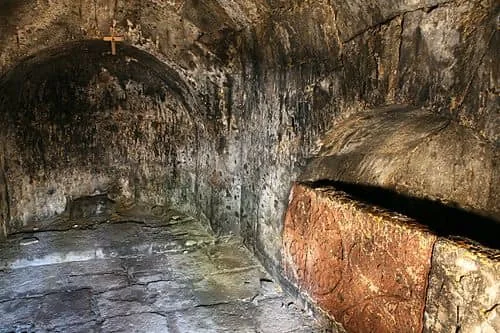
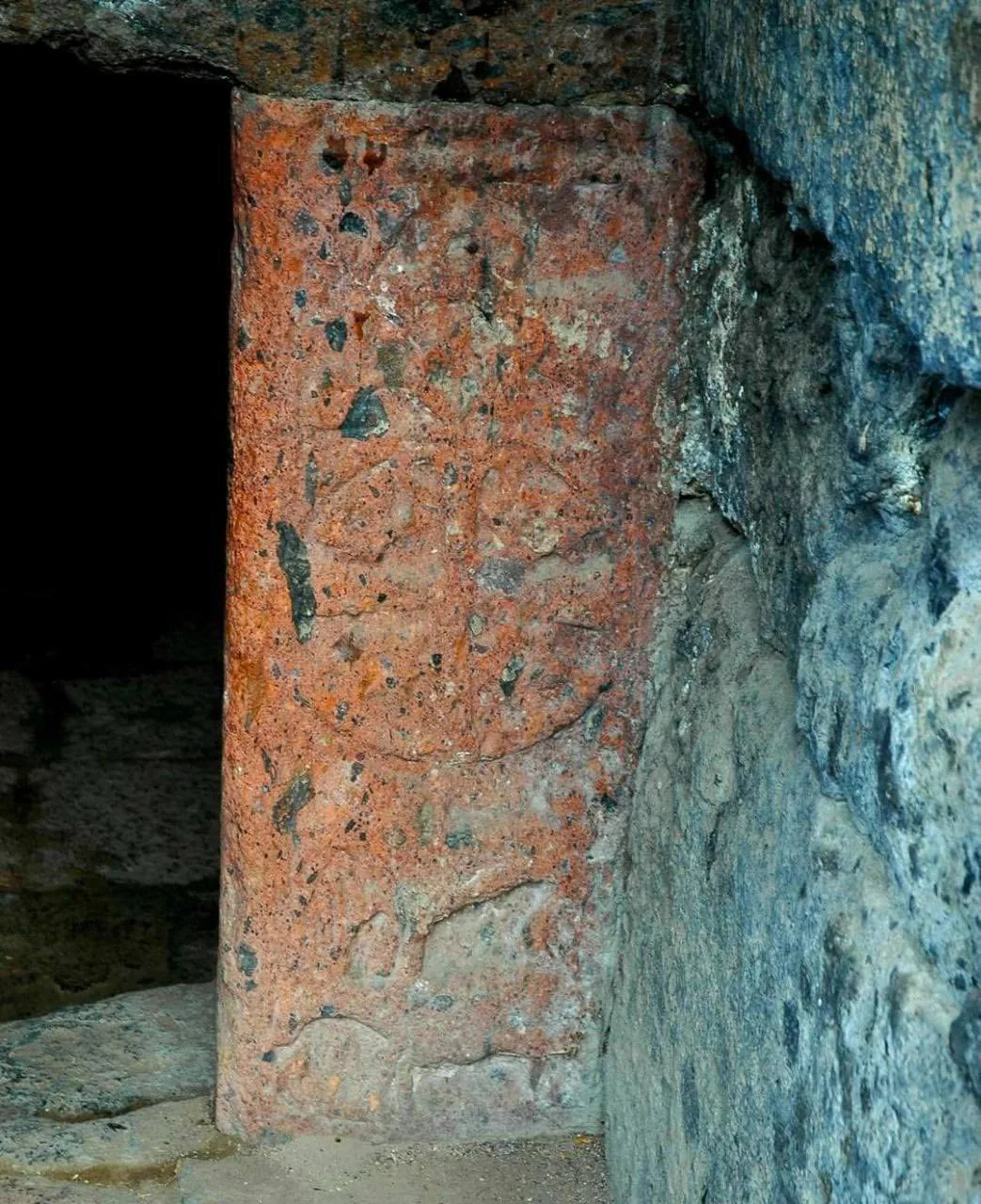
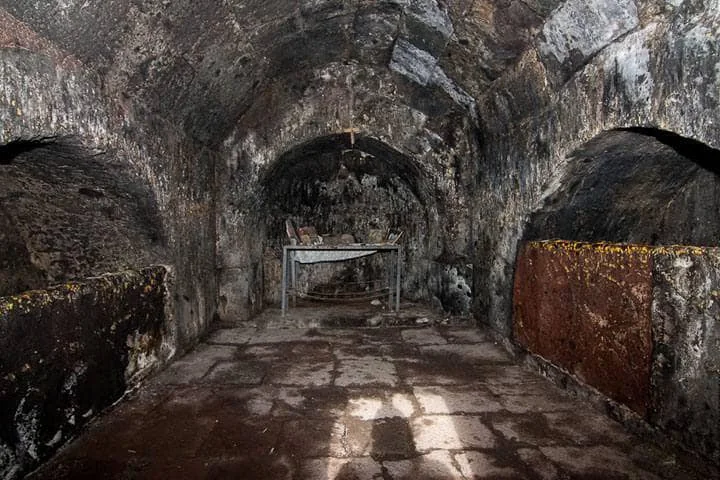
The tomb is lit only by the light coming through the doorway. Reliefs with hunting scenes survive on the stone pillars of the entrance. According to tradition, the pagan kings of the Arshakuni dynasty were buried to the left of the entrance, and to the right, near the relief with a cross, the kings who had already accepted Christianity. The sarcophagi are decorated with 4th-century reliefs. The right, Christian, sarcophagus shows a warrior spearing a boar. This scene symbolises the war between Armenia and Persia, since the boar was depicted on the seal of the Persian king.
According to the historian Pavstos Buzand, the Persians opened the graves of the Artashesian and Arshakuni kings and carried off their remains as captives, believing that with them “the glory, fortune and valour of the Armenian Kingdom” would pass to Persia. But the commander Vasak Mamikonyan, an ancestor of Vardan Mamikonyan, defeated the Persians, brought the sacred remains back to Armenia and laid them to rest again in Aghdzk.
The photograph shows the interior of the tomb, with a vaulted ceiling and stone walls. There are arched niches in the side walls, and at the back a metal table with objects placed on it.