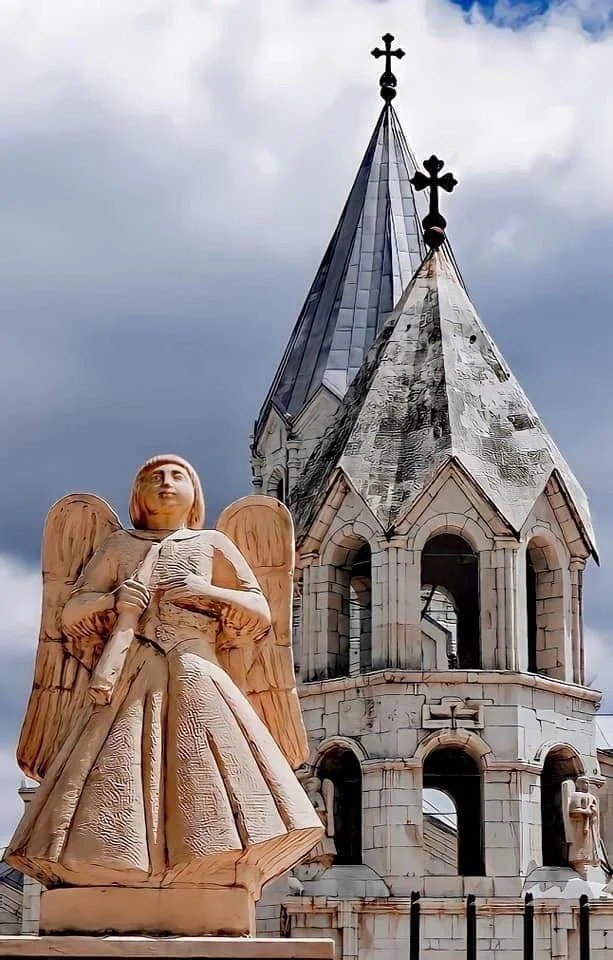


On the morning of 27 September 2020 Azerbaijan, with the political and military support of Turkey, launched a large-scale offensive along the entire line of contact in Nagorno-Karabakh. A war began that lasted 44 days and became the heaviest fighting since 1994. The Azerbaijani army made wide use of drones and long-range artillery. Stepanakert and other towns and villages came under rocket fire, and on 8 October the Holy Saviour Ghazanchetsots Cathedral in Shushi was struck twice. Civilians were killed on both sides, including by rocket attacks on Ganja and other cities in Azerbaijan.
The fighting was fiercest in the south, where Azerbaijani forces gradually advanced along the Araks valley and towards Hadrut. Ceasefires announced through the mediation of Russia, France and the United States did not hold. In early November Azerbaijani forces approached Shushi and on 8 November established themselves in the town. In Armenia and Artsakh tens of thousands of volunteers went to the front, and the diaspora gave great support.
On the night of 9 to 10 November the Prime Minister of Armenia and the Presidents of Azerbaijan and Russia signed a trilateral statement that ended military operations. Azerbaijan kept the territories that had come under its control during the war, Armenia undertook to return to it the districts of Aghdam, Kelbajar and Lachin, and Russian peacekeepers were deployed along the line of contact and in the Lachin corridor linking Nagorno-Karabakh with Armenia. Together with Kelbajar, the Dadivank monastery also passed under Azerbaijani control. According to official figures the Armenian side lost about 3,800 people and the Azerbaijani side about 3,000, and tens of thousands of people lost their homes.
After the war the roughly 120,000 Armenians living in Nagorno-Karabakh remained in a much reduced territory, in the presence of Russian peacekeepers. The questions of prisoners of war, missing persons and border delimitation remained unresolved. In 2021 and 2022 there were also clashes on the border between Armenia and Azerbaijan. On 13–14 September 2022 Azerbaijani forces struck many towns, villages and positions on the territory of Armenia, and hundreds of servicemen were killed on both sides.
On 12 December 2022 a group presenting itself as environmental activists, which according to many international observers was backed by the Azerbaijani authorities, blocked the Lachin corridor, the only road linking Nagorno-Karabakh with Armenia. In February 2023 the International Court of Justice ordered Azerbaijan to ensure unimpeded movement through the corridor, but in April an Azerbaijani checkpoint was set up on the road, and the blockade continued. For almost 10 months Nagorno-Karabakh lacked food, medicine and fuel, gas and electricity supplies were interrupted, and Red Cross aid often could not get through.
On 19 September 2023 Azerbaijan launched a military operation in Nagorno-Karabakh. The next day, 20 September, a ceasefire was agreed through the mediation of the Russian peacekeepers, under which the local forces were disarmed. In the short fighting hundreds of people were killed on both sides, including civilians. From 24 September the mass departure of the population through the Lachin corridor to Armenia began. In about one week more than 100,000 people, almost the entire Armenian population of Nagorno-Karabakh, left their homes. On 25 September an explosion at a fuel depot near Stepanakert took more than 200 lives. On 28 September the President of the Nagorno-Karabakh Republic signed a decree dissolving the state institutions from 1 January 2024.
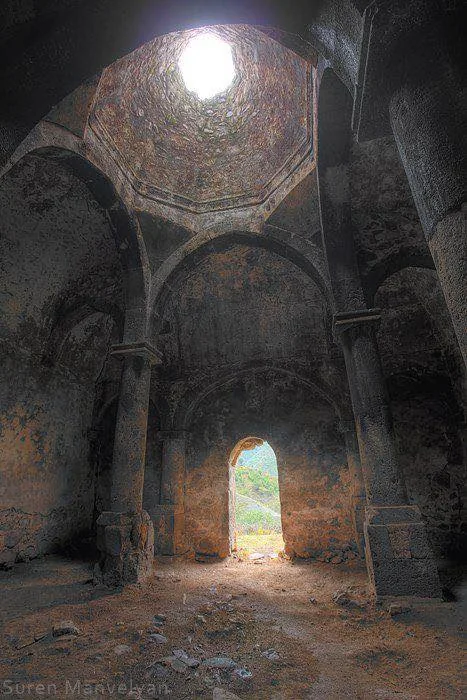
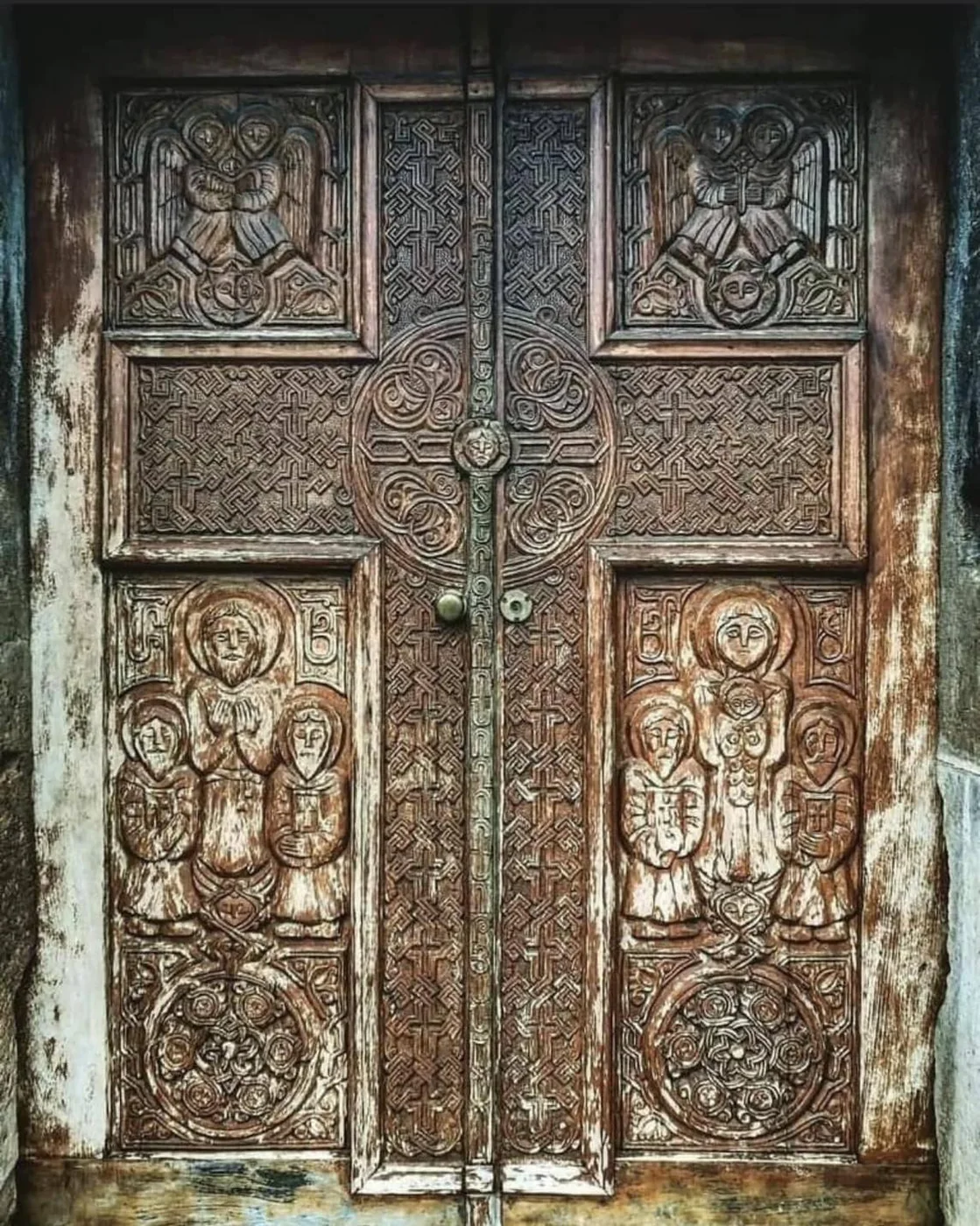
Thus the centuries-old life of Armenians in Artsakh was interrupted. Most of the refugees settled in Armenia, where the state and society helped them with shelter and means of living, but many families are still struggling to build a new life. Several former leaders of Artsakh were arrested and put on trial in Azerbaijan. Hundreds of churches and monasteries and thousands of khachkars and graves remained in Artsakh, from Gandzasar and Dadivank to the cathedral of Shushi, and their preservation is a concern for Armenians and for international cultural organisations. These events are among the most painful pages of the recent history of the Armenian people, and their consequences will be felt for a long time to come.